
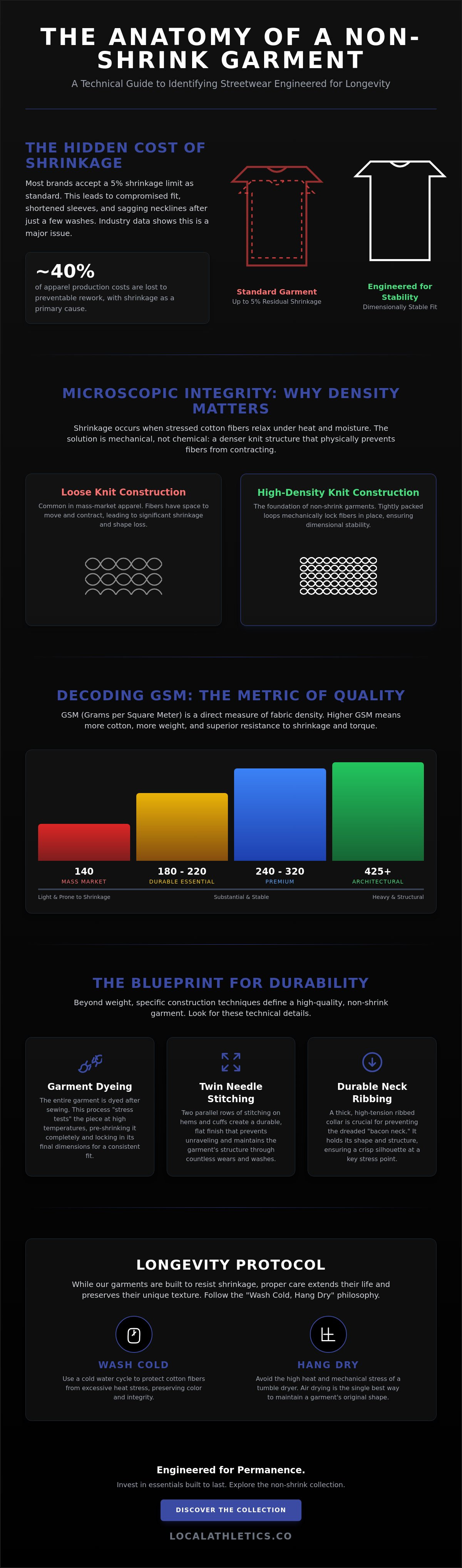
Industry data from 2026 reveals that nearly 40% of apparel production costs are lost to preventable rework, with fabric shrinkage remaining a primary culprit for garment failure. You have likely felt this loss personally when your search for long sleeve t-shirts that don't shrink ends with a favorite garment that loses its shape after a single laundry cycle. It's a common frustration to watch premium sleeves retreat past the wrist or witness a crisp neckline succumb to a sagging, exhausted fit.
We believe that longevity in streetwear is engineered through high-density fabric and stabilized fibers. This guide will teach you how to identify technical non-shrink construction, moving beyond basic labels to understand the physical properties that keep a silhouette intact. You'll learn why the weight of the jersey and the integrity of the supply chain are the only true defenses against the 5% shrinkage limit that most commercial brands consider acceptable.
We will examine the science of pre-shrunk cotton, the impact of the 2026 EU Digital Product Passport on material transparency, and how to select premium essentials that prioritize substance over fleeting trends. By the end of this guide, you'll be equipped to choose durable pieces, like a heavyweight crewneck or a technical mock neck, that maintain their fit wash after wash.
Key Takeaways
- Understand why true durability starts with fiber stabilization and technical construction rather than simple washing instructions.
- Learn how to use GSM metrics to identify premium heavyweight fabrics that maintain their hand-feel and structural integrity over time.
- Discover the specific design details, such as neck ribbing and twin stitching, that define high-quality long sleeve t-shirts that don't shrink.
- Explore how architectural streetwear silhouettes are supported by high-density cotton weights ranging from 220 GSM to 425 GSM.
- Master the "Wash Cold, Hang Dry" philosophy to protect the unique texture of your garments and extend their lifespan.
The Science of Non-Shrink Construction in 2026
Understanding why a garment changes shape requires looking at the microscopic level of the fiber. Cotton is a natural cellulose fiber that is stretched and stressed during the spinning and weaving process. When you introduce heat and moisture in a standard laundry cycle, these fibers seek their natural, relaxed state. This relaxation causes the fabric to contract, which is why finding true long sleeve t-shirts that don't shrink is often a challenge without deliberate engineering. It isn't just about the temperature of your water; it's about how the fabric was handled before it reached the sewing machine.
High-density knitting acts as a mechanical barrier to this contraction. By increasing the number of stitches per inch, manufacturers reduce the "empty space" between loops. This tight structure limits the distance a fiber can travel when it encounters the energy of a tumble dryer. For a long sleeve crewneck t-shirt, this structural integrity is vital. Because the sleeves carry more vertical surface area, they're particularly susceptible to shortening if the knit isn't sufficiently dense to resist the pull of the fibers.
Preshrunk vs. Non-Shrink: What is the Difference?
Many brands use the term "preshrunk" as a marketing shield, but it only describes a fabric that was washed before being cut into a garment. If the underlying knit is loose, the garment can still lose its shape over time through residual shrinkage. True non-shrink performance relies on dimensional stability in fabric, which is achieved through a combination of high-density construction and controlled finishing. At Local Athletics, we prioritize this stability by ensuring the stitch density is high enough to resist the mechanical energy of a dryer, ensuring the silhouette remains constant.
The Role of Garment Dyeing and Washing
Garment dyeing is one of the most effective ways to ensure a reliable fit. Unlike piece-dyed fabric, where the cloth is dyed in large rolls, garment-dyed items are dyed after they've been fully sewn. This process involves high temperatures and significant agitation, effectively "stress testing" the shirt before it ever reaches your wardrobe. Any potential shrinkage happens in the factory vats, locking the dimensions of the final product. Technical streetwear brands recognize this as a non-negotiable standard for producing long sleeve t-shirts that don't shrink. It results in a laundered, soft hand-feel that stays consistent from the first wear to the fiftieth.
Fabric Weight and GSM: The Metrics of a Premium Tee
GSM, or grams per square meter, serves as a transparent metric for evaluating the density and structural integrity of a garment. While many mass-market brands prioritize lightweight 140 GSM fabrics for cost efficiency, these thinner materials often lack the physical mass required to resist fiber contraction. In contrast, premium long sleeve t-shirts that don't shrink typically range from 240 to 425 GSM. This higher density ensures the fabric has the weight to drape naturally and the strength to withstand the mechanical energy of a washing machine drum.
Structural resilience is directly tied to how the fibers are packed together. Heavier fabrics are less prone to pilling because they utilize longer, combed cotton fibers that are tightly spun into the yarn. This construction also prevents "seam torque," the frustrating phenomenon where side seams twist toward the front of the body after a few washes. By choosing a higher GSM, you are investing in a garment that maintains its architectural shape through sheer material density rather than chemical stiffeners.
Understanding the Sweet Spot: 180 to 320 GSM
180 GSM represents the baseline for a durable everyday essential. It provides enough substance to feel high-quality without being overly restrictive for layering. For those who prefer a more defined silhouette, the 'Steve' Box Tee at 240 GSM offers a structured look that holds its form regardless of movement. By utilizing high-singles combed cotton, the 220 GSM fabric achieves a denser, more uniform surface that resists the internal stresses of laundering, significantly extending the garment's lifecycle. While the FTC Care Labeling Rule ensures manufacturers provide accurate washing instructions, the technical foundation of the fabric is what ultimately prevents dimensional loss.
Heavyweight Champions: 320 GSM and Beyond
Maximum structural resilience is found in the 'Harris' 320 GSM tee, which provides a substantial hand-feel and a silhouette that refuses to sag. At the absolute peak of streetwear engineering, the 'Jordan' 425 GSM tee represents the pinnacle of non-stretch durability. This weight is comparable to our heavyweight pocket hoodie standards, offering a level of permanence that lighter alternatives cannot match. These heavier weights are designed for those who value a permanent, legacy-focused approach to style. If you want a piece that feels as solid after fifty washes as it did on the first day, exploring our collection of premium heavyweights is the logical next step.
Silhouette and Fit: Beyond the Standard Crewneck
The silhouette of a garment is defined by the interaction between fabric weight and construction technique. While lower-density fabrics tend to cling or sag, heavyweight materials provide the structural foundation necessary for the architectural fits favored in modern streetwear. Finding long sleeve t-shirts that don't shrink involves looking past the fabric weight and into the structural reinforcements that hold a silhouette together. Twin stitching and shoulder-to-shoulder taping are not just aesthetic choices; they're essential engineering features that prevent the garment from stretching out of shape or developing the dreaded "hanger bump" at the shoulder line.
These reinforcements ensure that the points of highest stress, like the neck and shoulders, maintain their integrity over time. A well-constructed shirt balances a relaxed aesthetic with a tailored feel, ensuring the garment looks intentional rather than accidental. This balance is achieved through precise pattern cutting and a deep understanding of how stabilized cotton behaves when worn and washed. By prioritizing these technical details, we ensure that the fit you choose on day one remains the fit you wear for years to come.
The Box Fit vs. The Drop Shoulder
The 'Kai' Vintage Black exemplifies a perfectly engineered box fit, featuring a shorter body length that sits squarely on the hips. This silhouette relies on high-density fabric to maintain its crisp, rectangular shape without collapsing against the body. Conversely, the 'Plain Dave' utilizes a deep drop shoulder to create a breathable, oversized feel that prioritizes comfort and movement. When choosing between these fits, consider your layering preferences. A box fit offers a cleaner profile under a jacket, while a drop shoulder provides the volume necessary for a standalone statement piece.
Maintaining the Neckline and Cuffs
The longevity of a long-sleeve garment is often measured by its extremities. The 'Lyle' Classic Long Sleeve features robust cuffed sleeves, a design choice that effectively prevents the "sleeve-shortening syndrome" common in lower-quality apparel. These cuffs provide a physical anchor, ensuring the sleeves retain their intended length even after repeated laundry cycles.
Similarly, high-quality neck ribbing is vital for keeping the collar crisp after 50+ washes. A collar that sags or loses its elasticity is a sign of poor fiber recovery. We prioritize side-seamed construction over cheaper tubular methods. Side seams allow for a more anatomical fit and ensure that long sleeve t-shirts that don't shrink also don't twist, keeping the vertical alignment of the shirt perfect for the life of the garment.
The Local Athletics Non-Shrink Collection: Standout Picks
Selecting a garment that respects its original dimensions is an exercise in intentional shopping. We have translated the technical principles of fiber stabilization and high-density knitting into a curated range of essentials designed for the modern wardrobe. These long sleeve t-shirts that don't shrink are the result of rigorous testing and a commitment to material integrity. Whether you require a versatile layer for daily wear or a substantial, standalone statement piece, each item in this collection is engineered to maintain its silhouette through countless laundry cycles.
The 'Lyle' Classic Long Sleeve serves as our baseline for daily durability, utilizing a 220 GSM weight that offers a significant upgrade over standard retail options. For those who prefer a more architectural presence, the 'Steve' Box Tee provides a mid-to-heavyweight 240 GSM fabric. This specific weight ensures a structured drape that holds its shape away from the body, resisting the sagging often seen in thinner knits. Moving into our more robust offerings, the 'Harris' 320 GSM provides a level of garment longevity that bridges the gap between a standard tee and a light sweatshirt, while the 'Jordan' 425 GSM represents our heaviest, non-stretch drop shoulder t-shirt.
Essential Basics for Daily Wear
The 'Lyle' is often the perfect entry point for anyone seeking a premium long sleeve t-shirt. Its balanced weight makes it suitable for year-round layering without sacrificing the substantial hand-feel that defines our brand. If you prefer a more vintage aesthetic, the 'Staple Faded' 180 GSM tee offers a lived-in feel from the first wear. Despite its lighter weight compared to the 'Jordan', it still adheres to our strict stabilization standards, ensuring it doesn't shorten or twist. These essentials pair seamlessly with existing streetwear, providing a reliable foundation that respects the proportions of your entire outfit.
Statement Heavyweights for the Connoisseur
For those who prioritize substance and volume, the 'Delis' and 'Delis III' series offer an oversized fit in 100% heavy cotton. The 'Delis III' Vintage Washed combines this generous silhouette with non-shrink technology, providing a garment that feels broken-in but remains structurally sound. The 'Jordan' 425 GSM remains a 'buy-it-for-life' staple. Its sheer density makes it nearly impervious to the heat-related stresses of home drying, making it one of the most reliable long sleeve t-shirts that don't shrink available today. This is streetwear designed for permanence, prioritizing the long-term relationship between the wearer and the garment.
Choosing the right weight is the first step toward a more sustainable and satisfying wardrobe. Explore the full long-sleeve collection here to find the specific GSM and silhouette that matches your personal standard for quality.
Longevity Protocol: Caring for Your Streetwear Essentials
Even the most advanced long sleeve t-shirts that don't shrink require a disciplined maintenance routine to preserve their engineered qualities. While our stabilization processes lock the fibers in place, the introduction of extreme heat or harsh chemicals can still degrade the fabric's hand-feel over time. The 'Wash Cold, Hang Dry' philosophy isn't just a suggestion; it is a fundamental requirement for maintaining the structural integrity of premium cotton. Heat acts as a catalyst for fiber agitation, which can lead to unnecessary wear even if the garment resists shrinking. Cold water preserves the natural strength of the cellulose, ensuring your investment remains a staple for years.
Avoid fabric softeners entirely when laundering high-spec streetwear. These products function by coating fibers in a thin layer of chemicals, which may provide temporary softness but eventually clogs the weave and reduces breathability. For heavyweight cotton, this coating can alter the unique texture and matte finish of the fabric. Building a capsule wardrobe around high-quality streetwear essentials allows you to focus on a few well-maintained pieces rather than a rotating collection of disposable items. This intentional approach to ownership mirrors the care we put into the manufacturing process itself.
The Streetwear Laundry Framework
Preserving the depth of our 'Vintage Black' and 'Faded' colorways starts with washing garments inside-out. This simple step protects the face of the fabric from the abrasive action of the machine drum. A gentle cycle is preferable, as it minimizes the mechanical stress placed on the twin stitching and neck ribbing we discussed earlier. Once the cycle finishes, the secret to a perfect silhouette is manual reshaping. Gently pull the garment back into its intended dimensions while it is still damp, smoothing out any wrinkles before laying it out to dry. This prevents the fabric from drying in a distorted state, maintaining the architectural fit you expect.
Storage and Maintenance
Storage is just as critical as the wash cycle, especially for heavy 300+ GSM cotton. While hanging might seem convenient, the weight of a dense garment can cause the shoulders to distort over time, leading to permanent structural damage. Folding is the superior method for heavyweights like the 'Harris' or 'Jordan' tees. If you notice minor pilling after extensive wear, a fabric shaver can safely remove surface fibers without damaging the underlying structure. Storing your essential long sleeve tee flat prevents vertical stretch by removing the gravitational pull on the dense fibers. This methodical approach to care ensures that your long sleeve t-shirts that don't shrink remain a permanent part of your wardrobe.
Investing in Permanent Streetwear
Choosing garments that respect their original proportions is a commitment to both personal style and environmental responsibility. We have explored how material density, specifically heavyweight standards up to 425gsm, provides the structural foundation necessary to resist fiber contraction. True long sleeve t-shirts that don't shrink are the result of deliberate engineering and stabilized fibers rather than simple marketing claims. By combining these technical attributes with a disciplined care protocol, you ensure your wardrobe remains a collection of lasting essentials rather than a cycle of disposable pieces.
As a 100% British designed and owned brand, we prioritize substance and longevity in every stitch. Our engineered non-shrink technology is built into the fabric itself, providing a level of reliability that mass-market alternatives cannot match. This legacy-focused approach to style values the integrity of the supply chain as much as the quality of the final product. It's time to elevate your standards and invest in pieces that reflect your values wash after wash.
Shop Premium Long Sleeve T-Shirts Built to Last
Frequently Asked Questions
What is the best fabric for long-sleeve t-shirts that don’t shrink?
High-density combed cotton that has undergone fiber stabilization or garment dyeing is the superior choice for dimensional stability. While synthetic blends shrink less by nature, a premium 100% cotton fabric with a high GSM provides the best balance of breathability and structural permanence. The key is the mechanical density of the knit, which prevents the fibers from contracting when exposed to moisture.
Is 100% cotton better than a blend for preventing shrinkage?
Not necessarily, but it is better for longevity and hand-feel when engineered correctly. Blends containing polyester naturally resist shrinkage because synthetic fibers don't react to heat like natural ones; however, a high-quality 100% cotton tee that has been pre-shrunk and garment-dyed offers the same stability. This allows you to enjoy the natural properties of cotton without the risk of the garment losing its shape.
How can I tell if a shirt is 'preshrunk' or 'non-shrink'?
Look for technical descriptors like "garment-dyed" or "high-density knit" on the product specifications. "Preshrunk" simply means the fabric was washed before the cutting process, whereas "non-shrink" qualities often come from the mechanical density of the stitch itself. A shirt that feels substantial and resists light stretching is a better indicator of permanent stability than a generic marketing tag or label.
What does GSM mean and why does it matter for t-shirt quality?
GSM stands for grams per square meter and measures the weight and density of the fabric. In the context of long sleeve t-shirts that don't shrink, a higher GSM (typically 240 to 425) indicates more fiber mass. This density makes the garment more resistant to the internal stresses of laundering, ensuring it holds its architectural shape over time. It is a reliable indicator of substance and durability.
Will a heavyweight t-shirt shrink more than a lightweight one?
No, heavyweight t-shirts generally shrink significantly less than lightweight alternatives. The increased fiber density in a 300+ GSM shirt provides more mechanical resistance against contraction during the drying cycle. Lightweight fabrics often have looser knits with more "empty space" between loops, which allows the fibers to travel and tighten further when they encounter heat and moisture in your machine.
How should I wash my Local Athletics long-sleeve tee to prevent shrinking?
You should always wash your garment in cold water on a gentle cycle and hang it to dry. Heat is the primary enemy of natural fibers, so avoiding the tumble dryer is the most effective way to maintain the length and width of the shirt. Reshaping the tee while damp helps ensure the side seams and neckline remain perfectly aligned as the cotton fibers settle during the drying process.
Why do the sleeves on my long-sleeve shirts always get shorter?
Sleeves often shorten because they are cut along the vertical grain of the fabric, which experiences the most significant contraction during laundering. When searching for long sleeve t-shirts that don't shrink, look for features like robust cuffed wrists. These cuffs act as an anchor, providing structural reinforcement that helps the sleeve maintain its intended length even after repeated washes. This prevents the retreating sleeve line common in lower-quality apparel.
What is the difference between a box fit and a regular fit long-sleeve?
A box fit features a wider chest and a shorter, squared-off body length compared to the narrower, elongated profile of a regular fit. Box fits rely on heavyweight fabric to maintain their rectangular silhouette without collapsing against the body. Regular fits are more anatomical and often use lighter materials, making them suitable for layering but more prone to vertical distortion and stretching over time.
0 comments