
Most garments are designed for the moment of sale rather than a lifetime of wear. You've likely experienced the frustration of a sweatshirt that feels substantial in the store but loses its soul after just a few washes. Finding a genuine heavyweight hoodie men can actually depend on requires looking past marketing buzzwords and into the technical density of the fabric. It's about more than just warmth; it is about a garment that maintains its architectural drape and resists the common trap of shrinkage.
We understand that you're looking for a piece that stays consistent, regardless of how often it's worn. This guide will help you identify a truly premium hoodie that balances 420gsm density with the durability needed for long-term structural integrity. We will explore the technical specifications of premium streetwear, evaluate the cotton market trends of 2026, and provide the framework for investing in ethical apparel that keeps its shape for years. By understanding the intersection of fabric weight and construction, you can move away from fast fashion and toward a wardrobe built on substance.
Key Takeaways
- Learn how high-density fabric creates a superior aesthetic drape that maintains a structured silhouette over time.
- Understand why 420gsm is considered the industry sweet spot for balancing substantial warmth with everyday breathability.
- Discover the role of non-shrink technology and structural details in ensuring your garment preserves its original fit after multiple washes.
- Master physical quality checks, like the stretch recovery test, to identify a premium heavyweight hoodie men before you invest.
- Gain insight into how intentional, local design influences the longevity and cultural relevance of modern streetwear essentials.
Beyond the Basic: Why Men are Choosing Heavyweight Hoodies in 2026
The current fashion cycle marks a definitive end to the era of disposable apparel. Men are increasingly rejecting the cycle of frequent, low-quality purchases in favor of an investment wardrobe built on substance. This shift is most visible in the evolution of the hoodie. While the history of the sweatshirt began with utility and athletic performance, its modern iteration serves a more architectural purpose. A heavyweight hoodie men invest in today is expected to perform as a structured outer layer, providing a level of presence that lighter garments lack.
The appeal of a dense, 420gsm fabric is both aesthetic and psychological. Heavyweight cotton creates a superior drape, allowing the garment to hang away from the body in a way that feels intentional rather than accidental. This structural integrity ensures the hoodie maintains its silhouette throughout the day. There is also a distinct sense of comfort found in weight. A garment that possesses significant physical mass provides a feeling of security and permanence. It feels like real clothing. In 2026, the trend has moved away from loud, printed logos and toward the tactile quality of the fabric itself. The weave, the density, and the finish are the new status symbols.
The Problem with Standard High Street Hoodies
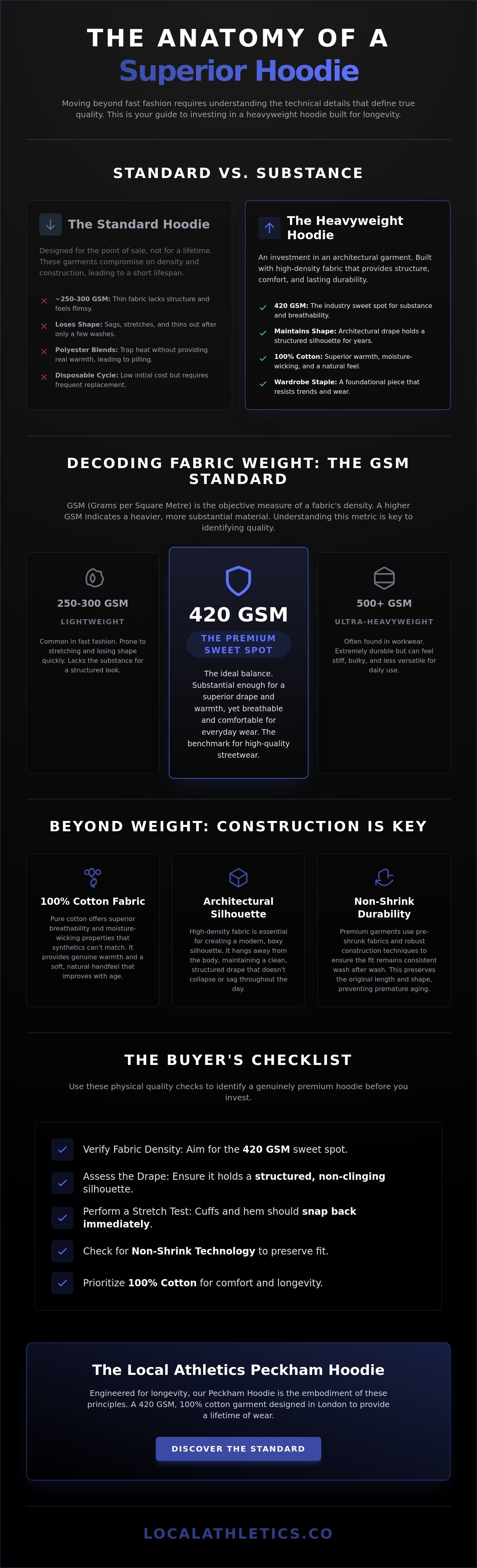
Most mass-market hoodies fall within the 250 to 300gsm range. These garments are designed for high-volume production and low shipping costs. Fast fashion retailers prioritize lighter weights because they are cheaper to transport, but the cost to the consumer is longevity. These thin fabrics often lose their shape after ten washes. They suffer from pilling, thinning at the elbows, and a general sagging that makes the garment look aged prematurely. Cheap polyester blends also trap heat without providing genuine warmth, leading to a garment that feels sweaty rather than cozy. Investing in a higher density prevents these structural failures.
Defining the Modern Streetwear Aesthetic
Modern streetwear has embraced a philosophy of quiet luxury. This aesthetic relies on a boxy, relaxed silhouette that requires a specific fabric stiffness to execute correctly. Thin fabrics collapse under their own weight, whereas a 420gsm cotton fleece holds its form. This creates a clean, sharp look that pairs effectively with tailored trousers or technical joggers. The focus is now on the integrity of the supply chain and the physical properties of the item. A hoodie is no longer just a casual afterthought; it is a decisive style choice that communicates a preference for quality and ethical craftsmanship.
The 420gsm Standard: Decoding Fabric Weights and Durability
Understanding the technical specifications of a garment is the first step in moving away from disposable fashion. GSM, or Grams per Square Metre, is the industry standard used to measure the density and weight of a fabric. It tells you exactly how much material has been packed into every square metre of the textile. For a heavyweight hoodie men choose for longevity, this number is the most reliable indicator of substance. While a standard 300gsm hoodie might feel adequate for light layering, it often lacks the structural integrity required to stand alone as a primary piece of outerwear.
Choosing the right weight requires balancing comfort with utility. At 300gsm, you have a versatile but thin garment that often sags over time. Once you move into the 500gsm range, the fabric can become cumbersome, feeling more like workwear than a wearable daily essential. The 420gsm mark is widely regarded as the premium sweet spot. It provides the necessary heft to create a sharp silhouette while remaining breathable enough for active use. Choosing 100% cotton over high-density poly-blends is equally vital. Pure cotton offers superior moisture wicking and a natural feel that synthetic fibers simply cannot replicate. You can see this technical balance in action with the Heavyweight Pocket Hoodie (Peckham) 420gsm, which prioritizes this specific density for year-round wear.
What Does 420gsm Actually Feel Like?
The tactile experience of a 420gsm garment is one of immediate quality. It possesses a noticeable density that feels substantial against the skin, yet it lacks the rigid stiffness found in heavy canvas or industrial fabrics. This weight is particularly effective at heat retention during outdoor activities, acting as a reliable thermal barrier against the wind. 420gsm represents the ideal balance for UK climates, providing sufficient insulation without becoming overbearing during daily transitions between the outdoors and heated interiors. It's a weight that feels like a protective layer rather than a simple shirt.
Why Weight Does Not Always Equal Quality
It's a common misconception that a heavy garment is automatically a better one. Some manufacturers use low-grade "filler" fibers or heavy synthetic blends to artificially increase the weight of a garment without improving its strength. You should look for a high-density weave rather than a loose, bulky knit. A tight weave ensures the fabric won't stretch out of shape after a few wears. The use of combed cotton is also a critical quality marker. Combing the cotton removes shorter, weaker fibers and impurities, which prevents the surface pilling that often ruins the appearance of cheaper, heavy sweatshirts. Real quality is found in the combination of weight and refined construction.
Construction Matters: From Mock Necks to Non-Shrink Tech
Fabric density is only half of the equation. A premium heavyweight hoodie men rely on must also possess superior structural engineering to remain a staple in a long-term wardrobe. Without proper construction, even the densest 420gsm cotton will eventually fail at the stress points or lose its intentional silhouette after a few cycles in the laundry. We look for double-stitched seams and reinforced pocket entries as standard markers of a garment built for longevity. These details provide the backbone that allows a heavy fabric to maintain its shape without sagging under its own weight.
Technological advancements in garment finishing have solved many of the traditional issues associated with high-cotton apparel. Non-shrink technology is a critical feature that involves pre-shrinking the fabric before the pattern pieces are ever cut. This ensures that the fit you buy is the fit you keep. Additionally, the use of cross-grain cutting is a hallmark of elite manufacturing. By rotating the fabric 90 degrees during the cutting process, makers can prevent vertical shrinkage and the frustrating twisting of side seams that often occurs in mass-produced alternatives. It's a methodical approach that prioritizes the garment's life cycle over manufacturing speed.
The Anatomy of a Premium Hoodie Neckline
The neckline is often the first area to show signs of wear. A mock neck design is superior for several reasons, primarily because it provides enhanced heat retention and a more structured appearance under jackets. High-quality ribbing in this area is essential; it must be reinforced to prevent the "bacon neck" effect where the collar becomes wavy and loose over time. For a refined, layered aesthetic, many find that a mock neck hoodie pairs perfectly over a long sleeve crewneck t-shirt. This combination offers a clean, intentional look that maintains its height and shape throughout the day.
Pockets and Ribbing: The Durability Test
A heavyweight pocket requires specific reinforcement to handle the weight of modern essentials like phones and keys without tearing at the corners. Premium designs often utilize inset pockets or bartack stitching at stress points to ensure the fabric remains intact. The ribbing used for cuffs and waistbands is equally vital. It should feature high-elasticity properties, allowing the garment to snap back to its original form after being stretched. Standard kangaroo pockets often sag and pull the front of the hoodie down, whereas reinforced, technical pocket designs distribute that weight more evenly across the torso, preserving the garment's architectural drape.
The Buyer's Checklist: How to Spot Quality Before You Buy
Identifying a premium heavyweight hoodie men can trust requires more than just reading a tag. You need a physical framework to separate marketing claims from actual craftsmanship. Start with the "Light Test." Hold the fabric up to a direct light source. A high-density weave should block almost all light, whereas a lower-quality garment will show visible gaps between the yarns. This density is what prevents the wind from cutting through and ensures the garment holds its shape over years of use.
Next, perform a "Stretch Recovery" test on the cuffs and waistband. Pull the ribbing firmly and release it. High-quality ribbing should snap back to its original position instantly. If it remains stretched or wavy, the garment will likely sag after only a few wears. You should also evaluate the hardware. Premium hoodies use heavy-duty cotton drawstrings and metal aglets rather than plastic tips, which are prone to cracking and signify a lack of attention to detail. Finally, look for ethical transparency. A brand that is proud of its manufacturing location and supply chain often produces a superior product because they aren't cutting corners in the factory. You can shop the heavyweight collection at Local Athletics to see these quality benchmarks in practice.
Evaluating the Fabric Surface
Consistency is a major indicator of garment health. Inspect the surface for uniform colour saturation; there should be no streaking or patches where the dye hasn't fully penetrated the fibers. When performing the "Hand Feel" test, be wary of garments that feel unnaturally slick or waxy. This often indicates the presence of chemical silicons used to mask lower-grade cotton. Instead, look for a high-quality brushed fleece interior. This process agitates the fabric to create a soft, lofted surface that provides maximum internal comfort and superior heat retention without the need for synthetic coatings.
Checking the Stitching Integrity
Turn the garment inside out to inspect the hidden details. A marker of industrial quality is the stitch count; higher stitches per inch (SPI) result in a stronger, more flexible seam. You should look for flatlock stitching rather than standard overlock seams in high-friction areas. Flatlock seams lay flat against the skin, reducing irritation and providing a cleaner aesthetic. Most importantly, check the stress points. Reinforced bartacks on the corners of the pocket are non-negotiable for heavyweight gear. These small, dense lines of stitching prevent the pocket from tearing away from the body when you're carrying essentials, ensuring the garment remains functional for the long haul.
The Local Athletics Peckham Hoodie: Streetwear Built for Longevity
The Peckham 420gsm Hoodie represents our specific answer to the search for a perfect heavyweight hoodie men can rely on for a decade. We designed this flagship piece in the heart of London, rooting its aesthetic in the grit and creativity of local streetwear culture while maintaining a global perspective on ethics. It isn't just another garment; it's a technical response to the failures of the high street. By combining a 420gsm high-density weave with our proprietary non-shrink technology, we've created a piece that retains its architectural drape from the first wear to the hundredth.
Our mock neck construction directly addresses the most common consumer complaint: the loss of shape at the collar. This reinforced design ensures the neckline stays crisp, providing a structured look that works as effectively on the street as it does in a professional setting. We don't believe in fleeting trends. We focus on building a legacy of durability, ensuring that every stitch serves the purpose of longevity. This is the standard we set for ourselves and our community.
Ethical Production and Global Perspective
We operate with a transparent manufacturing process that prioritizes fair labor and environmental consciousness. While many brands prioritize shipping weight over garment health, we understand that durability is the most sustainable feature a garment can have. A hoodie that lasts ten years is infinitely better for the planet than five hoodies that last two. By prioritizing 100% British design and ownership, we balance our local roots with a commitment to global ethical standards. We haven't just built a supply chain; we've built a network of partners who share our dedication to substance and integrity.
Join the Community of Conscious Innovators
Choosing Local Athletics means moving beyond the cycle of disposable fashion. Our philosophy centers on substance over fleeting trends, focusing on the tactile reality of the garment rather than loud marketing gimmicks. Our "Essential" line, including the Heavyweight Pocket Hoodie (Peckham) 420gsm and our Non-Shrink Mock Neck Sweatshirt, provides the foundation for a modern, intentional wardrobe. These pieces are designed for those who value craftsmanship and want their clothing to reflect their standards.
Invest in quality that speaks for itself. Whether you are layering for a London winter or looking for a standalone piece that maintains its boxy silhouette, our collection offers the structural integrity you've been looking for. Explore our range and discover why 420gsm is the only standard that matters for the modern man.
Invest in Substance: Building Your 2026 Wardrobe
The transition toward an investment wardrobe requires a focus on technical density and structural permanence. True value is no longer found in a logo, but in the 420gsm fabric weight that defines a premium heavyweight hoodie men can wear for years. By prioritizing 100% British design and innovative non-shrink mock neck technology, you ensure your garment remains a staple rather than a fleeting purchase. This methodical approach to construction prevents the common frustrations of sagging and shrinkage that plague standard high-street apparel.
It is time to move away from disposable fashion and toward a standard of quality that respects both the wearer and the maker. Our commitment to ethical production and local streetwear culture ensures that every piece we create is built to last. You are not just buying a sweatshirt; you are investing in a legacy of craftsmanship that maintains its integrity wash after wash. This level of intentionality ensures your style remains grounded in substance rather than fleeting trends.
Shop the Peckham 420gsm Heavyweight Hoodie Collection and experience the difference of intentional design. Choose apparel that holds its shape as long as you hold your standards.
Frequently Asked Questions
What is the best GSM for a heavyweight hoodie?
The ideal density for a heavyweight hoodie men choose for longevity falls between 400 and 450 GSM. This specific range provides enough physical mass to maintain a structured silhouette while ensuring the garment remains breathable for daily wear. While weights above 500 GSM exist, they can often feel restrictive or overly stiff. Sticking to the 420 GSM standard ensures a balance of warmth and comfort that works across multiple seasons.
Will a 100% cotton heavyweight hoodie shrink in the wash?
Natural cotton fibers have a tendency to contract when exposed to heat. However, premium garments often utilize non-shrink technology or pre-shrunk fabrics to mitigate this issue. If a hoodie isn't specifically labeled as pre-shrunk, you should expect some minor shrinkage after the first few laundering cycles. Choosing garments with cross-grain cutting also helps maintain the vertical length and prevents the side seams from twisting over time.
Is a heavyweight hoodie too hot for summer?
A heavyweight hoodie is generally designed for cooler temperatures, but 100% cotton versions offer surprising breathability. Unlike synthetic blends that trap heat and moisture, pure cotton allows for better air circulation. It might be too substantial for a peak summer afternoon, but it serves as an excellent outer layer for cooler summer evenings or transitional weather. The density provides a reliable thermal barrier without the suffocating feel of polyester.
How do I wash a premium 420gsm hoodie to make it last?
Longevity depends on a gentle maintenance routine. You should wash your hoodie inside out on a cold, delicate cycle to preserve the fabric's surface and colour saturation. Avoid using fabric softeners, as these can coat the cotton fibers and reduce their natural breathability. Air drying is essential; the high heat of a tumble dryer is the primary cause of fiber breakdown and structural warping in dense, 420gsm garments.
What is the difference between a heavyweight hoodie and a standard sweatshirt?
The primary difference lies in the density and the resulting drape of the garment. Standard sweatshirts typically range from 250 to 300 GSM, making them thinner and more prone to losing their shape. A heavyweight hoodie men invest in utilizes a tighter weave and significantly more material. This results in a boxy fit that stands away from the body, providing a more intentional and premium aesthetic compared to the sagging look of lighter alternatives.
Why is the neck construction so important on a heavyweight hoodie?
The weight of a 420gsm fabric puts significant stress on the collar and shoulders. Without a reinforced mock neck or high-elasticity ribbing, the weight of the hood will pull the front of the garment down, leading to a distorted neckline. Proper neck construction ensures the hoodie maintains its architectural look and stays crisp over time. It prevents the common wavy collar effect where the ribbing loses its tension and becomes loose.
Does a higher price always mean a better quality hoodie?
Price is often a proxy for quality, but it isn't a guarantee. You should prioritize technical specifications like GSM, stitch count, and manufacturing location over a luxury logo. Some high-priced brands use standard materials and focus their budget on marketing. A truly premium garment will be transparent about its supply chain and the specific construction methods, such as bartack reinforcements and flatlock stitching, that justify the investment.
How should a men's heavyweight hoodie fit?
A modern heavyweight hoodie should have a relaxed, slightly boxy fit that doesn't sacrifice structure. The shoulder seams should sit naturally at or slightly below the edge of your shoulders to create a clean line. It should feel substantial and roomy without appearing oversized or sloppy. Because the fabric is dense, the hoodie should hang straight down rather than clinging to your torso, maintaining an intentional silhouette from every angle.
0 comments